
Micro-Influencer Marketing in Pune for Small Businesses: A Complete Guide to Affordable Brand Growth in 2026
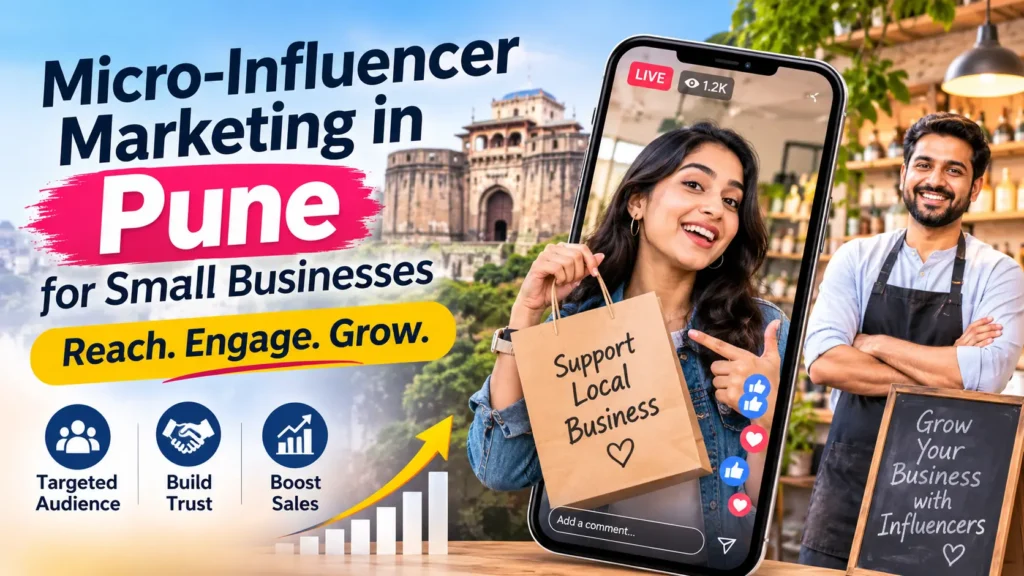
Small businesses in Pune are discovering new ways to reach potential customers, build brand awareness, and increase sales through social media. Among the most effective strategies is micro-influencer marketing in Pune, which allows local businesses to connect with targeted audiences through trusted content creators. Instead of spending large budgets on celebrity endorsements, businesses can collaborate with niche influencers who have established relationships with their followers.
From restaurants and fashion boutiques to real estate companies, beauty brands, fitness studios, and emerging e-commerce businesses, micro-influencer marketing offers opportunities to reach relevant audiences across Instagram and YouTube.
At Digital Planet, we help businesses explore influencer marketing strategies that align with their target audience, campaign objectives, and marketing budgets. By identifying suitable creators, developing engaging campaigns, and measuring performance, we help brands make their social media marketing efforts more purposeful.
In this comprehensive guide, we explain how micro-influencer marketing works, why it is valuable for small businesses in Pune, how to find the right influencers, and how to develop campaigns that generate meaningful results.
What Is Micro-Influencer Marketing?
Micro-influencer marketing is a digital marketing strategy in which businesses collaborate with social media creators who have relatively small but engaged audiences. These creators typically specialise in particular niches, such as food, fashion, beauty, travel, fitness, technology, parenting, or local lifestyle content.
Although follower-count definitions vary, micro-influencers are commonly associated with audiences ranging from approximately 10,000 to 100,000 followers. However, the right classification depends on the platform, industry, and marketing objective.
The primary advantage of working with micro-influencers is that their audiences often share specific interests. A Pune-based restaurant, for example, may benefit more from collaborating with a local food creator whose followers regularly explore restaurants in the city than from partnering with a celebrity whose audience is spread across the country.
Micro-influencers can help businesses:
- Introduce products and services to relevant audiences.
- Build awareness among local consumers.
- Generate authentic-looking social media content.
- Encourage product discovery and store visits.
- Increase website traffic and enquiries.
- Support product launches and promotional campaigns.
- Collect user-generated content for future marketing activities.
The goal is not simply to reach more people. It is to reach the right people with content that encourages them to take action.
Why Micro-Influencer Marketing Is Important for Small Businesses in Pune
Pune has a diverse consumer market comprising students, working professionals, families, entrepreneurs, and young consumers who actively use social media to discover products and services.
Businesses operating in areas such as Baner, Wakad, Hinjawadi, Kharadi, Viman Nagar, Kothrud, Pimpri-Chinchwad, and Koregaon Park can use geographically relevant influencer collaborations to connect with potential customers in their preferred service areas.
1. Affordable Marketing Opportunities
Small businesses often operate with limited advertising budgets. Large celebrity endorsements may involve substantial fees, production expenses, and additional promotional costs.
Micro-influencer campaigns can provide a more flexible alternative. Businesses can collaborate with a few carefully selected creators rather than investing their entire budget in one prominent personality.
Depending on the creator’s reach, content requirements, engagement, and usage rights, collaborations may involve paid promotions, product exchanges, service experiences, or negotiated packages.
For example, a neighbourhood café could invite selected food creators to experience its menu and produce Instagram Reels. A clothing boutique could collaborate with local fashion creators to showcase its latest collection.
The important consideration is whether the collaboration reaches the intended audience and supports a measurable business objective.
2. Stronger Connections With Local Audiences
Local relevance is particularly important for businesses that depend on customers visiting a physical location.
A salon in Wakad, for instance, may want to attract customers living or working nearby. Collaborating with Pune-based beauty and lifestyle creators can introduce the salon to people who are more likely to book an appointment.
Similarly, a restaurant in Baner could work with local food creators to promote a new menu, weekend offer, or dining experience.
By selecting creators whose audiences match the business’s service area, brands can make their campaigns more relevant to potential customers.
3. Trust and Authentic Recommendations
Social media audiences often follow creators because they appreciate their opinions, experiences, and content style.
When an influencer demonstrates a product, explains its features, or shares an honest experience, followers can better understand how it may fit into their lives.
For small businesses competing against established brands, these recommendations can help introduce unfamiliar products and services to new audiences.
However, authenticity depends on transparent communication. Paid partnerships and gifted collaborations should be disclosed appropriately, and businesses should avoid encouraging creators to make misleading claims.
4. Engaging Video Content
Short-form video has become an important format for product discovery and brand storytelling.
Instagram Reels and YouTube Shorts allow creators to demonstrate products, visit business locations, explain services, and present customer experiences in engaging formats.
A fashion creator can style several outfits from a local boutique. A food influencer can demonstrate a restaurant’s signature dishes. A fitness creator can introduce a gym’s facilities and training environment.
These videos can help potential customers understand a business before visiting its website, contacting its team, or making a purchase.
5. Opportunities for Long-Term Brand Building
Micro-influencer marketing does not need to be limited to one-time promotions.
Businesses can build long-term relationships with creators who consistently produce relevant content and attract suitable customers.
Repeated collaborations can help audiences become familiar with a brand, understand its offerings, and recognise its products when they encounter them elsewhere.
For small businesses in Pune, a carefully managed network of local creators can become a valuable part of an ongoing digital marketing strategy.
Which Small Businesses in Pune Can Benefit From Micro-Influencer Marketing?
Micro-influencer marketing can support businesses across a wide range of industries. The best approach depends on the audience, buying behaviour, product category, and campaign objective.
Restaurants, Cafés, and Food Businesses
Food businesses can collaborate with local food bloggers, restaurant reviewers, and lifestyle creators.
Potential campaign ideas include:
- New restaurant openings.
- Menu launches and seasonal specials.
- Café experiences and signature beverages.
- Food tasting sessions.
- Family dining promotions.
- Special occasions and festive menus.
Creators can produce Reels, photographs, reviews, and location-based content that introduces their audiences to the dining experience.
For a restaurant, campaign success should be evaluated through indicators such as reservations, enquiries, offer redemptions, and attributable visits rather than views alone.
Fashion Boutiques and Clothing Brands
Fashion influencers can showcase clothing collections, styling combinations, seasonal trends, and shopping experiences.
A boutique in Pune might collaborate with creators to promote festive wear, everyday clothing, ethnic fashion, or accessories.
Possible formats include outfit-transition Reels, styling tutorials, shopping visits, and product demonstrations.
These collaborations can help businesses present their collections in real-life contexts while reaching audiences interested in fashion.
Beauty Salons and Skincare Businesses
Beauty creators can help salons, makeup artists, skincare retailers, and wellness businesses demonstrate their services and products.
Campaigns may include makeup transformations, salon experiences, skincare routines, and service explainers.
Businesses should ensure that promotional content is accurate, especially when it involves skincare benefits, cosmetic treatments, or health-related claims.
Real Estate Companies
Real estate businesses can collaborate with local lifestyle creators and property-focused content creators to introduce residential projects, amenities, neighbourhood facilities, and location advantages.
A creator might produce a property walkthrough or explain the features of a sample apartment.
For real estate campaigns, businesses should prioritise factual information and comply with applicable advertising and real estate regulations.
Gyms, Fitness Studios, and Sports Academies
Fitness creators can introduce gym facilities, training programmes, swimming classes, group activities, and fitness experiences.
For example, a fitness studio in Pune could invite local creators to experience a trial session and explain the available membership options.
The content should accurately represent the facilities and avoid unsupported claims about health outcomes.
E-Commerce and D2C Brands
Online businesses can use micro-influencers to demonstrate products and encourage potential customers to explore their websites.
Suitable categories include perfumes, personal care, accessories, home products, fashion, and lifestyle goods.
Campaign formats may include product demonstrations, unboxing videos, comparisons, styling ideas, and creator-specific discount codes.
Businesses can track traffic and purchases using unique links, promotional codes, and analytics tools.
How to Find the Right Micro-Influencers in Pune
Finding influencers should involve more than searching for creators with large follower counts.
A successful collaboration requires alignment between the creator’s audience, content quality, location, credibility, and the business’s marketing objectives.
Step 1: Define Your Target Audience
Begin by identifying the customers you want to reach.
Consider their age range, interests, location, purchasing behaviour, and preferred social media platforms.
For example, a premium salon may target working professionals interested in beauty and personal care. A student-focused café may prioritise creators whose audiences regularly explore affordable food and entertainment around Pune.
A clearly defined audience makes influencer selection more effective.
Step 2: Search for Pune-Based Creators
Search Instagram and YouTube using relevant niche and location keywords.
Examples include:
- Pune food bloggers.
- Pune fashion influencers.
- Pune lifestyle creators.
- Pune beauty influencers.
- Pune fitness creators.
- Pune travel vloggers.
- Pimpri-Chinchwad influencers.
- Pune product reviewers.
Review the creators’ recent posts, audience interactions, content style, and location relevance.
Hashtags and social media search can help discover potential collaborators, but every creator should be evaluated individually.
Step 3: Analyse Engagement Quality
Follower count does not necessarily indicate campaign effectiveness.
Examine how followers interact with the creator’s content. Relevant comments, genuine questions, meaningful conversations, and consistent audience interest can provide useful signals.
A simple engagement-rate calculation is:
Engagement Rate = (Likes + Comments) ÷ Followers × 100
For example, if a creator has 20,000 followers and receives an average of 800 likes and comments per post, the basic engagement rate is:
800 ÷ 20,000 × 100 = 4%
This calculation is only a preliminary indicator. It does not establish whether the audience is genuine, whether the engagement is relevant, or whether the creator can generate sales.
Where possible, review average Reel views, Story reach, audience demographics, geographic distribution, and previous campaign performance.
Step 4: Check Audience Relevance
A creator may have thousands of followers but very few people in the location a business wants to target.
For a local Pune business, audience geography can be more important than overall reach.
Ask creators to share relevant audience insights where available. Check whether their followers match the intended customer profile and whether their content regularly attracts local interest.
Step 5: Review Previous Brand Collaborations
Examine the creator’s previous sponsored posts and brand partnerships.
Consider whether the content appears natural, informative, and consistent with the creator’s usual style.
Look for evidence that the creator can explain products clearly, follow campaign instructions, meet deadlines, and communicate professionally.
A creator who produces consistently strong content in a relevant niche may be a better choice than someone with a much larger but less suitable audience.
How Much Does Micro-Influencer Marketing Cost in Pune?
The cost of micro-influencer marketing in Pune varies according to creator popularity, audience quality, content format, campaign complexity, and usage rights.
There is no single fixed price that applies to every influencer.
A creator may charge differently for an Instagram Story, Reel, YouTube integration, product photography package, or physical store visit.
The following table provides illustrative budgeting ranges for planning purposes, not verified market averages or guaranteed quotations.
| Influencer Category | Illustrative Budget Per Creator | Potential Collaboration |
|---|---|---|
| Nano-influencers | ₹1,000–₹5,000 | Local awareness, product experiences, niche content |
| Micro-influencers | ₹5,000–₹25,000 | Reels, product demonstrations, targeted promotions |
| Established niche creators | ₹15,000–₹50,000+ | Higher-production content and broader audience reach |
Actual rates can fall below or above these ranges. Some creators may accept products or services as part of a collaboration, while others charge professional fees regardless of their follower count.
Additional expenses may include product samples, delivery, location arrangements, content production, paid amplification, and advertising usage rights.
Example: A ₹25,000 Micro-Influencer Campaign
Consider a small Pune business allocating ₹25,000 to a local influencer campaign.
An illustrative budget could include:
- ₹15,000 for three creator collaborations at ₹5,000 each.
- ₹5,000 for product samples, logistics, or campaign coordination.
- ₹5,000 for boosting selected content through paid advertising, subject to appropriate permissions.
The business could evaluate the campaign by tracking reach, profile visits, website sessions, enquiries, offer redemptions, and attributable sales.
These figures are only an example. Actual creator fees, production expenses, and advertising costs will vary.
The objective is to identify which creators and content formats produce the most valuable results for the business.
Best Micro-Influencer Marketing Strategies for Small Businesses
A strong campaign begins with a clear objective and a suitable content strategy.
Rather than asking creators simply to promote a business, provide them with a specific reason to communicate with their audience.
1. Instagram Reels Campaigns
Instagram Reels can introduce products, showcase business locations, and explain services through short videos.
For example, a Pune perfume retailer could collaborate with fragrance creators to demonstrate different fragrance profiles, explain product options, and showcase suitable occasions for wearing particular perfumes.
A restaurant could use Reels to introduce its signature dishes, while a boutique could highlight different styling combinations.
The content should capture attention quickly, communicate the main benefit, and include an appropriate next step.
2. Instagram Stories With Trackable Offers
Stories can be useful for limited-time promotions, product launches, event announcements, and direct-response campaigns.
Businesses can provide each creator with a unique discount code or campaign link.
For example, a café could give each participating influencer a different code and compare how many customers redeem each offer.
This approach helps distinguish general awareness from measurable customer action.
3. Local Store Visit Campaigns
Businesses with physical locations can invite creators to experience their products or services.
A creator might visit a salon, restaurant, boutique, gym, or retail outlet and document the experience.
The content can include the location, available services, important features, and booking or contact information.
Store visit campaigns are particularly useful when the business wants to increase local awareness and encourage potential customers to visit in person.
4. Product Reviews and Demonstrations
Product demonstrations help customers understand how an item works and what distinguishes it from alternatives.
For example, an e-commerce brand selling perfumes could collaborate with fragrance creators to explain scent profiles, longevity experiences, packaging, and suitable occasions.
Any performance claims should be accurate and appropriately qualified.
Honest demonstrations can help potential customers make more informed purchasing decisions.
5. User-Generated Content Campaigns
Influencer collaborations can generate content that businesses may wish to reuse in their marketing.
This might include product demonstrations, customer experiences, unboxing videos, lifestyle photographs, and short testimonials.
However, publishing content on a creator’s profile does not automatically grant unlimited advertising or commercial usage rights.
Businesses should obtain clear permission covering the intended platforms, duration, edits, and advertising use before reusing creator content.
6. Seasonal and Festival Campaigns
Pune businesses can plan influencer campaigns around relevant occasions, including Diwali, Eid, Christmas, Valentine’s Day, wedding seasons, and local events.
A fashion brand might promote festive collections, while a perfume retailer could showcase gift sets and fragrance combinations.
Planning campaigns in advance allows businesses to coordinate creator availability, product inventory, promotional offers, and content production.
Micro-Influencer Marketing on Instagram vs YouTube
Instagram and YouTube offer different opportunities for small businesses.
Choosing the right platform depends on the product, audience, content format, and desired customer action.
| Feature | YouTube | |
|---|---|---|
| Popular content formats | Reels, Stories, carousels | Shorts, reviews, tutorials, long-form videos |
| Typical strengths | Visual discovery and quick engagement | Demonstrations, explanations, and in-depth reviews |
| Local business applications | Store visits, launches, offers | Detailed experiences, walkthroughs, reviews |
| Campaign tracking | Reach, interactions, profile visits, link clicks | Views, watch time, engagement, tracked traffic |
| Suitable objectives | Awareness, discovery, enquiries | Product education, consideration, demonstrations |
Instagram may be particularly suitable for businesses that depend on visual discovery and frequent customer interaction.
YouTube can be valuable when products require more explanation or customers benefit from detailed demonstrations.
Some businesses may benefit from using both platforms. For example, a creator could publish a detailed YouTube review and produce a shorter Instagram Reel highlighting the most important product features, provided the agreed deliverables and usage rights allow it.
How to Measure Micro-Influencer Marketing Results
Measuring campaign performance helps businesses understand whether their investment is generating meaningful outcomes.
The most relevant metrics depend on the campaign objective.
Brand Awareness Metrics
For awareness campaigns, monitor:
- Total reach.
- Impressions.
- Video views.
- Audience retention.
- Profile visits.
- Growth in relevant followers.
These metrics indicate how many people encountered the content and how audiences interacted with it.
Engagement Metrics
For engagement-focused campaigns, evaluate:
- Likes.
- Comments.
- Shares.
- Saves.
- Story interactions.
- Meaningful audience questions.
Engagement should be assessed in context. A high number of likes does not automatically indicate strong purchase intent.
Website Traffic and Lead Generation
For campaigns designed to generate enquiries, track:
- Link clicks.
- Website sessions.
- Landing-page engagement.
- Form submissions.
- WhatsApp enquiries.
- Phone calls where attribution is available.
UTM-tagged links and analytics tools can help identify traffic originating from individual creators.
Sales and Return on Investment
For conversion campaigns, use unique discount codes, tracked links, and relevant sales records to measure attributable purchases.
A simple return-on-investment calculation is:
ROI = (Profit Attributable to Campaign − Campaign Cost) ÷ Campaign Cost × 100
Suppose a campaign costs ₹20,000 and generates ₹50,000 in attributable contribution profit before campaign expenses.
ROI = (₹50,000 − ₹20,000) ÷ ₹20,000 × 100 = 150%
This example assumes the ₹50,000 represents contribution profit after relevant product and fulfilment costs, but before the campaign expense. If the figure represents revenue rather than profit, the calculation must account for product costs, discounts, delivery, returns, and other relevant expenses.
Accurate measurement helps businesses make better decisions about future collaborations.
Common Micro-Influencer Marketing Mistakes Small Businesses Should Avoid
Even a well-planned campaign can underperform when important details are overlooked.
Choosing Influencers Only by Follower Count
A large audience is not necessarily the right audience.
Prioritise relevance, audience location, content quality, and campaign objectives rather than selecting creators solely by popularity.
Ignoring Fake Engagement
Unusual engagement patterns, repetitive comments, and inconsistent views may justify further investigation.
Request available performance insights and review the creator’s recent content before finalising a collaboration.
Using Unclear Campaign Briefs
Creators should understand the campaign objective, key product information, deliverables, deadlines, disclosure requirements, and call to action.
A clear brief reduces misunderstandings while allowing creators enough freedom to communicate naturally with their audiences.
Expecting Immediate Sales From Every Campaign
Brand awareness, audience education, and direct conversions are different objectives.
Some campaigns introduce a business to new customers, while others encourage people who already know the brand to make a purchase.
Evaluate performance against the original objective rather than expecting every collaboration to produce immediate sales.
Failing to Track Results
Without tracking links, discount codes, enquiries, or other appropriate indicators, it becomes difficult to understand which creators delivered value.
Establish a measurement system before publishing the campaign.
Ignoring Advertising Disclosures
Sponsored content and other material connections between brands and creators should be disclosed in accordance with applicable advertising guidelines.
Clear disclosure supports transparency and helps audiences understand the commercial nature of a collaboration.
Why Choose Digital Planet for Micro-Influencer Marketing in Pune?
At Digital Planet, we approach influencer marketing as a business growth activity rather than simply arranging social media promotions.
Our objective is to connect brands with suitable creators, develop relevant campaigns, and establish a process for evaluating performance.
Influencer Discovery and Selection
We help businesses identify creators according to their industry, audience, geographic relevance, content quality, and campaign requirements.
The focus remains on selecting suitable partners rather than relying exclusively on follower counts.
Campaign Strategy and Planning
We develop campaign approaches based on the business’s marketing goals.
These may include local brand awareness, product launches, store visits, website traffic, lead generation, and sales-focused promotions.
Instagram and YouTube Campaigns
We support campaign planning across Instagram and YouTube, helping businesses select relevant content formats and creator partnerships.
The right combination depends on the target audience, campaign budget, and intended customer journey.
Content Coordination and Execution
We help coordinate creator communication, campaign briefs, content schedules, deliverables, and promotional messaging.
A structured process makes it easier to manage multiple creators and maintain consistency across a campaign.
Performance Tracking and Reporting
We help businesses assess campaign outcomes through relevant performance indicators.
Depending on the campaign, reporting can include reach, engagement, views, website traffic, enquiries, and attributable conversions.
This information supports more informed decisions about future influencer collaborations.
Businesses looking for an influencer marketing company in Pune can explore Digital Planet’s services and discuss a campaign tailored to their goals.
How to Get Started With Micro-Influencer Marketing in Pune
Small businesses do not need to begin with a large campaign.
A focused pilot campaign can help establish which creator profiles, content formats, and promotional messages work best for a particular audience.
We recommend the following process:
Step 1: Establish a clear objective. Decide whether the priority is awareness, enquiries, store visits, website traffic, or sales.
Step 2: Set a realistic budget. Account for creator fees, content production, product samples, logistics, advertising, and usage rights.
Step 3: Identify suitable creators. Shortlist influencers whose audiences and content align with the business.
Step 4: Define deliverables. Specify the number of posts, content formats, publication dates, disclosure requirements, and agreed usage permissions.
Step 5: Launch and monitor the campaign. Track content performance and customer actions using appropriate analytics and attribution methods.
Step 6: Evaluate the results. Identify which creators and formats delivered the most relevant outcomes.
Step 7: Improve the next campaign. Use the findings to refine audience selection, messaging, budget allocation, and content strategy.
This process allows businesses to learn from actual campaign results and build a more effective influencer marketing programme over time.
Frequently Asked Questions About Micro-Influencer Marketing in Pune
1. What is micro-influencer marketing in Pune?
Micro-influencer marketing in Pune involves collaborating with social media creators who have relatively small, focused audiences to promote products, services, and businesses to relevant consumers in Pune and surrounding areas.
These collaborations may include Instagram Reels, YouTube videos, product demonstrations, restaurant visits, reviews, and promotional campaigns.
2. Is micro-influencer marketing suitable for small businesses?
Yes. Micro-influencer marketing can suit small businesses because campaign scope and spending can be adjusted to available budgets.
Businesses can begin with a limited number of creators, measure results, and expand their campaigns when they identify effective partnerships.
3. How much does a micro-influencer charge in Pune?
Pricing varies according to audience size, engagement, niche, content format, production requirements, and usage rights.
Some collaborations may cost a few thousand rupees, while more established creators may charge considerably more. Businesses should request quotations based on specific deliverables rather than relying solely on follower-count pricing.
4. How can we find genuine micro-influencers in Pune?
Search for creators using relevant industry and location keywords. Review their content quality, audience geography, engagement patterns, previous collaborations, and available performance insights.
A structured evaluation process helps businesses identify creators who are relevant to their intended customers.
5. Is Instagram or YouTube better for micro-influencer marketing?
Both platforms can be effective.
Instagram is useful for short-form visual content, local discovery, and promotional campaigns. YouTube can be suitable for detailed product demonstrations, reviews, and longer explanations.
The best platform depends on the audience, product, and campaign objective.
6. Can micro-influencer marketing help local shops increase sales?
Yes. Local shops can use influencer collaborations to introduce their products, communicate offers, increase awareness, and encourage store visits.
Sales outcomes depend on factors such as audience relevance, product demand, pricing, content quality, and the purchasing experience.
7. How do we measure the success of an influencer campaign?
Success can be measured through reach, views, engagement, website visits, enquiries, discount-code redemptions, and attributable purchases.
The appropriate metrics should be established before the campaign begins.
8. Can small businesses collaborate with multiple micro-influencers?
Yes. Collaborating with several suitable creators can help businesses reach different audience segments and compare performance across partnerships.
The number of creators should be determined by the campaign budget, management capacity, and desired reach.
9. Do micro-influencers accept barter collaborations?
Some creators accept product or service exchanges, while others require monetary compensation.
The arrangement depends on the creator’s preferences, the value of the offer, the work involved, and the agreed deliverables. Both parties should document the terms clearly.
10. Why should we work with an influencer marketing agency in Pune?
An influencer marketing agency can help businesses with creator discovery, campaign planning, coordination, content requirements, and performance measurement.
Working with an agency may be especially useful when a business needs to manage multiple creators or run campaigns consistently.
Conclusion: Grow Your Small Business With Micro-Influencer Marketing in Pune
Micro-influencer marketing provides Pune’s small businesses with a practical way to connect with relevant audiences, showcase their products, and strengthen their digital presence.
Whether you operate a restaurant, boutique, salon, fitness studio, real estate company, or e-commerce brand, the right influencer collaboration can help introduce your business to potential customers through engaging and relevant content.
The key is to choose creators carefully, establish clear campaign objectives, communicate expectations, and measure meaningful outcomes.
Rather than focusing exclusively on follower counts, businesses should evaluate audience relevance, content quality, local reach, and the ability to support specific marketing goals.
At Digital Planet, we help businesses plan influencer marketing campaigns that connect creator partnerships with broader digital growth objectives.
Ready to explore micro-influencer marketing for your business in Pune?
Visit Digital Planet at https://digitalplannet.in/ to explore our influencer marketing services and discuss a campaign aligned with your business goals.
Let’s turn the right creator partnerships into meaningful opportunities for your brand.